Youth Protection & Abuse Prevention
The safety and well-being of children and teens in our care is, and always will be, our top priority. We are committed to creating safe environments where young people can learn, grow, and thrive—and to continuously strengthen our practices to protect children from abuse.
Our Accreditation Journey
The YMCA of Greensboro association is currently in the process of becoming accredited through Praesidium. Praesidium specializes in preventing sexual abuse in organizations that serve youth and vulnerable adults. Over a period in excess of 25 years, the company has reviewed over 4,000 cases of abuse within organizations to determine the root causes of sexual abuse within organizational settings. Praesidium employs more than 40 staff, including licensed social workers, lawyers, psychologists, health care researchers, and other experts. The company has served over 5,000 clients with a broad range of products and services to aid organizations in preventing abuse, including online and instructor‐led trainings; organizational risk assessments; model policies and incident investigations. Having trained more than one million people online and hundreds of thousands in person, Praesidium is the largest and most comprehensive sexual abuse risk management firm globally.
Partners in Prevention
Praesidium Accreditation gives an organization access to best practices, written resources to strengthen prevention efforts, and consultation with our experts. Praesidium’s Safety Equation® identifies eight organizational operations that provide opportunities to decrease the risk of abuse by employees, volunteers, or other program participants. To learn more about Praesidium Accreditation and download the Accreditation Standards, visit: www.praesidiumaccreditation.com.

Why Child Abuse Prevention Matters
Child abuse prevention is a shared responsibility. Understanding the scope of the issue helps all of us stay informed, alert, and proactive.
National Statistics (United States)
- Each year, hundreds of thousands of children are confirmed victims of abuse or neglect in the U.S.
- Approximately 1 in 4 girls and 1 in 13 boys experience sexual abuse before age 18.
- More than 90% of children who experience sexual abuse know the person who abuses them (family member, trusted adult, or older youth).
- Many children never disclose abuse during childhood.
- Children with disabilities are at increased risk of abuse.
Abuse can take many forms, including:
- Sexual abuse
- Physical abuse
- Emotional abuse
- Neglect
- Peer-to-peer sexual misconduct
Most abuse occurs in environments where adults assume “it wouldn’t happen here.” That’s why prevention requires clear policies, ongoing training, active supervision, and a culture where concerns are taken seriously.

Prevention Starts with Awareness
Research shows child sexual abuse is preventable when organizations:
- Carefully screen and select staff and volunteers
- Establish clear boundaries and codes of conduct
- Train adults to recognize grooming behaviors and warning signs
- Eliminate isolated one-adult/one-child situations
- Respond immediately and appropriately
to concerns
Prevention is not a one-time effort. It requires ongoing vigilance, accountability, and a commitment to continuous improvement.
How We Keep Kids Safe
We take the following steps to keep youth safe:
Screening & Selection
- Criminal background checks and reference checks for staff and high-access volunteers.
- Screening against sex offender registries. Screenings are completed daily on members and guests in our database.
- Hiring practices designed to reduce abuse risk and increase accountability.
Training
- Required child abuse prevention training for staff and high-access volunteers, refreshed annually, including how to prevent and respond to concerns (adult-to-child and youth-to-youth behaviors).
Boundaries & Code of Conduct
- Clear expectations for appropriate interactions with youth (physical contact, verbal interactions, one-on-one situations, and electronic communication).
- Policies that prohibit staff/volunteers from contacting youth outside of YMCA programs (except as authorized/approved in your policy).
- Reducing or eliminating one-adult/one-child situations; interactions should be observable and interruptible.
Supervision & Monitoring
- Procedures to identify and manage higher-risk activities and settings (examples: restrooms/locker rooms, transportation, off-site programs, one-on-one instruction, camps).
Reporting & Response
- Staff and volunteers are required to report suspected child abuse in accordance with applicable laws.
- Allegations are taken seriously, and we cooperate with authorities in a prompt and empathetic manner.
Continuous Improvement
- Regular self-assessment and action planning to strengthen practices over time.
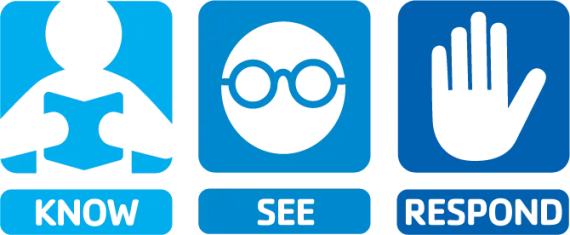
KNOW
Learn the facts: most children know the person who harms them, and many never disclose. When adults understand risk and warning signs, prevention is possible.
SEE
Stay alert to boundary violations and grooming behaviors (ex: secrecy, favoritism, gifts, isolated time, private messages).
RESPOND
If something feels wrong, report it. You don’t need proof to make a report—reasonable suspicion is enough.
If A Child Tells You Something
If a child reports abuse to you:
- Believe them and listen.
- Stay calm. Fear of an adult’s reaction can stop disclosure.
- Re-establish safety. Protect them from the person of concern and reassure them.
- Get help. Report to the appropriate agency and seek medical/emotional care as needed.
How to Report A Concern
To report suspected child abuse:
Contact your local child protective services and/or law enforcement.
To report a concern involving our YMCA:
- Notify a YMCA staff member or leader immediately (front desk, program director, executive director or an on-site supervisor).
- Confidential reporting option: report youth safety concerns here.
- To report suspected child abuse or neglect in Guilford County, NC, call the Department of Social Services (DSS) at 336-641-SAFE (7233) or visit the Family Justice Center (201 S. Greene St., Greensboro). Reports can be made anonymously to stop, investigate, or prevent child maltreatment.
- To report suspected child abuse or neglect in Rockingham County, contact the Rockingham County Department of Social Services directly at 336-342-1394 or through the Rockingham County NC website.
Child Safety Incident Report Contacts
YMCA of Greensboro Corporate Office
620 Green Valley Road, Suite 210, Greensboro, NC 27408
(336) 854–8410
Sr. Association Youth Development Director: Shawna Spencer
Vice President of Finance and Business Administration: Brenda Willis
Additional Resources
Every youth participant should be able to recognize the YMCA Safety High Five, explain what each step means, and know how to use it when they need help.
- Speak Up: If something feels wrong, tell a trusted adult
- Stick Together: Stay with your group and avoid wandering off alone
- Know Your Safe Adults: Identify trusted adults who can help when you need support
- Report It Right Away: Tell an adult immediately about unsafe behavior, bullying, or anything that makes you uncomfortable
- Follow the Y Way: Follow YMCA rules and expectations to help keep everyone safe
All Youth-Serving Programs Should:
- Review the YMCA Safety High Five at the beginning of programming
- Reinforce the Safety High Five throughout program activities
- Display the Safety High Five in program spaces where youth can easily see and reference it
- Encourage youth to learn, remember, and use the Safety High Five in their daily program experience